This transformation is the result of a global move toward sustainable commercial design, a movement reshaping how businesses function and how cities evolve. Dubai, long celebrated for architectural ambition, is now redefining progress by merging sustainability with luxury and design with responsibility. The future of business in the UAE is no longer built solely with steel and glass, it is built with values that place people and the planet at the center.
The Evolution of Dubai’s Commercial Landscape
Dubai’s early rise was marked by spectacle. Towering skylines, bold façades, and engineering records shaped its global identity. Yet the city’s narrative has matured. Growth is no longer measured only in height or scale, but in longevity and impact.
Aligned with the UAE Net Zero 2050 goals and the Dubai 2040 Urban Master Plan, sustainability has become a defining pillar of development. Commercial spaces are being reimagined to support energy efficiency, environmental responsibility, and business resilience.
Office towers, retail environments, and mixed-use developments now reflect a deeper understanding of what modern enterprises need. Sustainability has moved beyond ideology. It has become a strategic advantage.
Why Sustainable Design Matters for Businesses
The physical environment of a workplace shapes far more than appearances. It influences how people think, collaborate, and perform. Businesses across Dubai are recognizing that sustainable design directly affects productivity, operational costs, employee satisfaction, and brand perception.
Lower Operating Costs
Sustainable commercial buildings rely on intelligent systems to manage energy and water use efficiently. LED lighting, advanced HVAC solutions, smart thermostats, and motion sensors work together to minimize waste.
Solar installations further reduce dependency on traditional power sources. Over time, these systems significantly lower operating expenses, offering long-term financial relief for businesses managing large-scale facilities.
Enhanced Employee Well-Being
Work environments influence mental clarity and physical health. Access to natural light, improved ventilation, green elements, and ergonomic layouts creates spaces where employees feel energized rather than drained.
Research consistently shows higher satisfaction and productivity in green buildings. In a city driven by innovation and creativity, this human-centered approach becomes a powerful asset.
Stronger Brand Identity
Sustainability now plays a central role in corporate reputation. Businesses operating from environmentally responsible spaces communicate innovation, accountability, and long-term thinking.
In Dubai’s global business districts, sustainable design carries prestige. It reflects leadership, credibility, and alignment with international expectations.
Core Elements of Sustainable Commercial Design
Dubai’s sustainable commercial environments are shaped by four core principles: efficiency, wellness, adaptability, and innovation.
Energy Efficiency
Modern buildings incorporate double-glazed façades, insulated structures, and reflective roofing to reduce heat gain and energy loss. Smart grids and real-time monitoring systems allow facility managers to track usage and address inefficiencies instantly.
Solar integration has become increasingly common. Rooftop panels and vertical photovoltaic systems are turning commercial buildings into active contributors to the energy ecosystem.
Smart Water Management
Water efficiency is critical in Dubai’s climate. Sustainable designs integrate greywater recycling, sensor-based fixtures, and drought-tolerant landscaping to reduce consumption.
Some developments capture and repurpose condensation from air-conditioning systems, transforming a byproduct into a valuable resource.
Eco-Conscious Materials
Material choices now reflect environmental awareness. Locally sourced resources, recycled steel, reclaimed wood, low-emission paints, and modular construction methods reduce ecological impact while supporting local supply chains.
Green certification systems such as LEED, Estidama, and WELL Building Standard are guiding sustainable material use throughout the construction lifecycle.
Biophilic Design
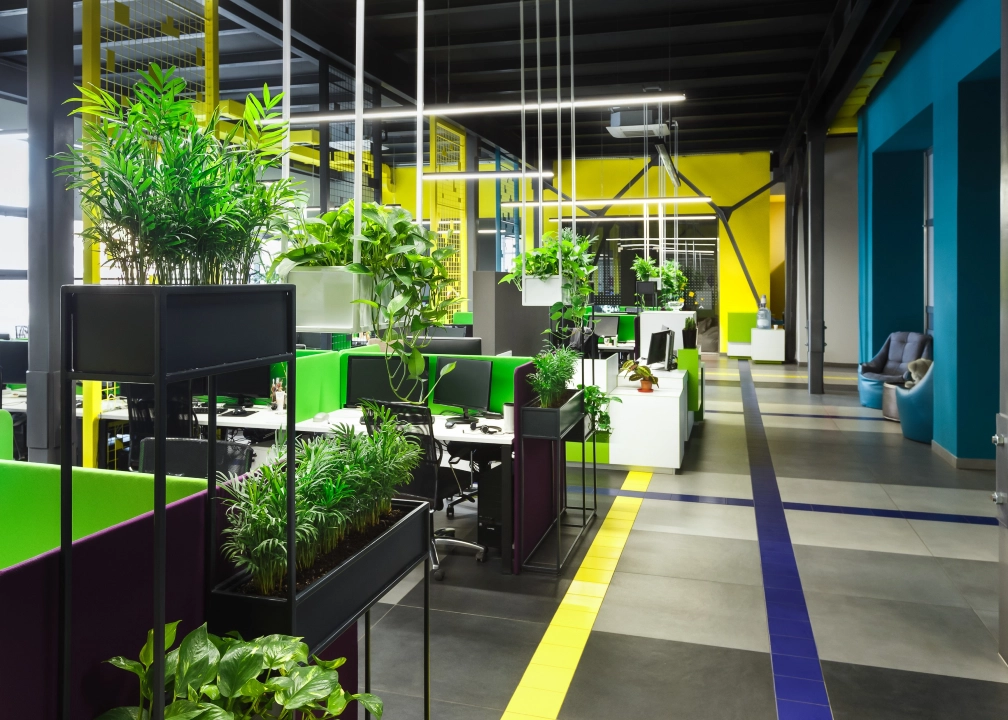
Biophilic design reconnects people with nature through architecture. Indoor gardens, living walls, daylight corridors, and water features soften urban interiors.
These elements enhance air quality, reduce stress, and stimulate creativity. In business environments, this translates into improved focus and stronger engagement.
The Role of Technology in Sustainable Business Spaces
Technology serves as the unseen foundation of Dubai’s sustainable transformation. Smart systems allow buildings to respond, adapt, and improve continuously.
IoT integration enables sensors to monitor air quality, occupancy, lighting, and temperature in real time. AI-driven platforms anticipate energy demand, automate maintenance, and fine-tune operations.
Digital twins, virtual models of physical buildings, allow engineers to simulate performance changes before implementing upgrades. Sustainable mobility is also supported through electric vehicle charging infrastructure and intelligent parking systems.
Together, these technologies turn business spaces into responsive ecosystems that evolve alongside their users.
Future Trends in Dubai’s Sustainable Commercial Design
Net-Zero Energy Buildings
Future developments aim to achieve energy neutrality, producing as much energy as they consume. Innovations in solar glass, micro wind systems, and thermal storage are making this vision increasingly attainable.
Adaptive Reuse and Modular Spaces
Rather than demolishing existing structures, developers are repurposing buildings to reduce waste. Modular office systems allow spaces to expand, contract, or reconfigure as business needs shift.
Hybrid Work-Inspired Design
Workplace design has evolved to support flexibility. Offices now prioritize shared collaboration areas, wellness zones, outdoor workspaces, and technology-enabled environments that accommodate both in-office and remote teams.
Circular Design Thinking
Circular design focuses on longevity. Materials are selected and assembled to be reused, recycled, or adapted over time, reducing waste and extending building life cycles.
The Economic Advantage of Going Green
While sustainable construction may require higher upfront investment, long-term returns are compelling. Reduced energy costs, lower maintenance needs, and government incentives offset initial expenses.
Certified sustainable properties consistently show higher occupancy rates and stronger resale values. In Dubai’s competitive commercial market, sustainability has become a defining marker of premium real estate.
The Role of Collaboration
Successful sustainable design relies on collaboration across disciplines. Architects, engineers, developers, and corporate tenants must work together from the earliest stages.
Partnering with specialists in Design Build Services ensures sustainability is integrated into every phase of development rather than added retrospectively.
By aligning form, function, and future readiness, Dubai’s developers continue to set global standards for responsible commercial design.
Sustainability is no longer an emerging concept in Dubai. It is shaping the present skyline and defining the next phase of growth. Each new commercial space reflects a shared commitment to progress without compromise.
As the city continues to expand and innovate, its approach sends a clear signal to the world. Luxury and responsibility can exist side by side. Dubai’s business spaces are not only built for commerce. They are built for longevity, consciousness, and the century ahead.